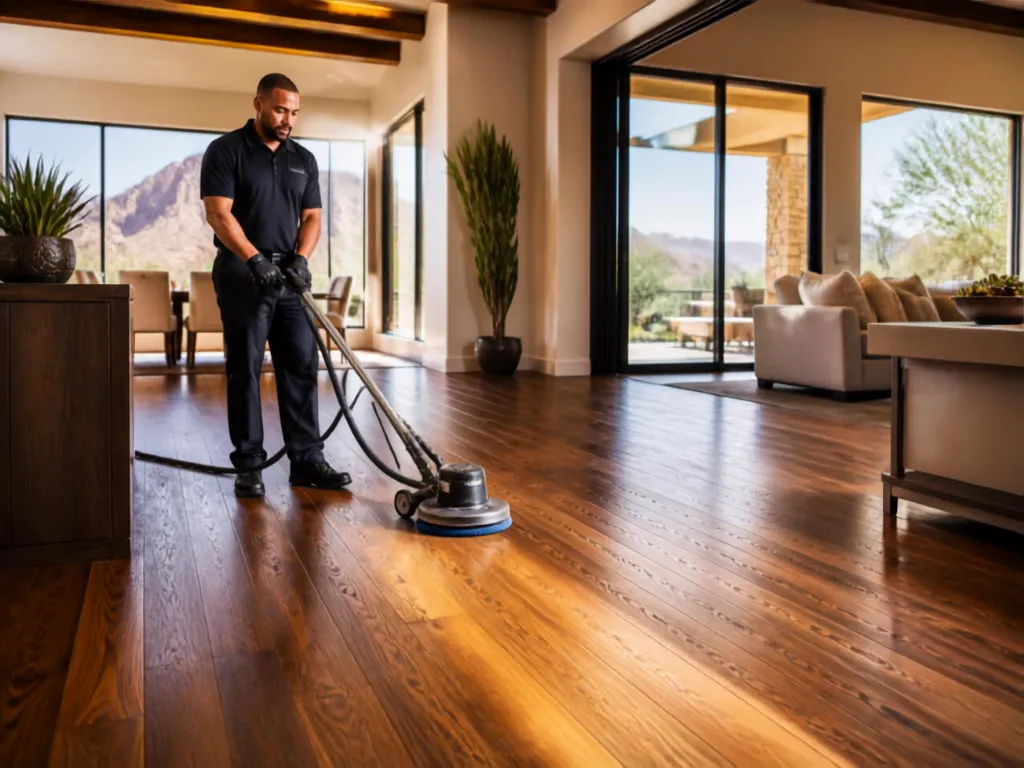
Safe Cleaning for Hardwood Floors: What Professional Care Should Look Like
Hardwood floors are durable, but durability does not mean they can be cleaned with just any product, machine, or method.
The surface of a hardwood floor needs to be treated according to its material and existing finish. Using excessive moisture, harsh chemicals, abrasive equipment, or an unsuitable cleaning process can create problems that proper maintenance is designed to prevent.
For homeowners in Phoenix and Scottsdale, this matters even more because hardwood floors regularly encounter fine dust, outdoor debris, foot traffic, and everyday household activity.
A floor can be cleaned frequently and still be cleaned incorrectly.
That is why professional hardwood floor care should focus on two things at the same time: removing the dirt and buildup affecting the floor while protecting the surface that is already there.
Safe cleaning is not about using the strongest possible treatment.
It is about using the right treatment for the floor.
Hardwood Floors Require a Different Approach
Every flooring material has its own maintenance requirements.
Carpet can be cleaned using methods designed to work with fibers.
Tile and grout require a different approach.
Hardwood is different again.
Wood is a natural material, and the finish covering it plays an important role in protecting the surface.
This means professional cleaning needs to account for the condition of the floor, the existing finish, the amount of buildup, and the type of everyday traffic the surface receives.
A method that works well on another flooring material may not be appropriate for hardwood.
Understanding that difference is essential to proper floor care.
Why Too Much Moisture Can Be a Problem
One of the most important principles of hardwood floor maintenance is controlling moisture.
Hardwood is not designed to be saturated with water during routine cleaning.
Excess moisture can create unnecessary risks for the flooring, particularly if it is allowed to remain on the surface or reach areas where it should not.
Professional hardwood cleaning therefore needs to be controlled.
The goal is to clean effectively without unnecessarily exposing the floor to moisture.
This is one reason professional equipment and experience matter.
The cleaning process should be deliberate rather than excessive.
Stronger Chemicals Do Not Mean Better Cleaning
Another common misconception is that stronger cleaning products automatically produce better results.
They do not.
The purpose of cleaning is to remove unwanted material from the surface while maintaining the condition of the flooring.
A harsh chemical that is inappropriate for a particular hardwood finish may create more problems than it solves.
Professional floor care focuses on using products and processes that are appropriate for the surface.
The objective is controlled cleaning rather than chemical intensity.
Protecting the Existing Finish
The finish on hardwood is an important protective layer.
It helps shield the underlying wood from everyday use and contributes to the appearance of the flooring.
When the finish is properly maintained, the floor can remain attractive and functional for many years.
That is why cleaning should be performed with the finish in mind.
Professional hardwood cleaning should remove surface dirt and buildup without unnecessarily damaging or stripping away the existing protective layer.
This preservation-focused approach is especially important for property owners who want to extend the life of their flooring.
Everyday Dirt Can Become Abrasive
Fine dirt may not look dangerous.
But when particles remain on the surface and people repeatedly walk over them, they can contribute to everyday wear.
This is particularly noticeable in high-traffic areas.
Entryways, hallways, kitchens, and frequently used living spaces experience much more activity than quieter rooms.
Keeping those areas clean helps reduce the amount of debris being moved across the surface.
Professional cleaning can remove accumulated particles and help maintain a cleaner floor between routine maintenance.
Phoenix Homes Have Unique Dust Challenges
The dry Arizona environment can introduce additional challenges for hardwood floors.
Fine dust can enter homes through normal daily activity.
Doors open and close.
People come inside from outdoors.
Pets move between indoor and outdoor spaces.
Windows and ventilation systems can contribute to the movement of airborne particles.
Over time, that dust settles on the flooring.
Hardwood can show the effects because large floor areas make buildup easier to notice.
Professional cleaning can help manage that accumulation while maintaining the condition of the existing finish.
Why High-Traffic Hardwood Needs Special Attention
Not every part of a hardwood floor receives the same amount of use.
The path from the entrance to the main living area may receive constant traffic.
The kitchen may be used throughout the day.
A hallway may connect several frequently used rooms.
These areas can develop more visible dirt and traffic buildup.
A professional cleaning approach should recognize these differences.
The objective is not simply to clean the floor quickly.
It is to address the actual conditions affecting the surface.
Safe Cleaning Helps Preserve Natural Hardwood Beauty
One of the biggest reasons people choose hardwood is its natural appearance.
The grain.
The color variation.
The texture.
The warmth.
These characteristics should remain visible after cleaning.
A good professional cleaning process should not leave the floor looking artificial.
Instead, it should remove the material that is hiding the natural appearance.
When dirt and residue are removed properly, the existing finish can look clearer and the wood can appear more vibrant.
The result is a floor that looks maintained rather than artificially altered.
What Professional Hardwood Cleaning Should Avoid
A professional hardwood cleaning process should avoid unnecessary treatment.
That includes:
Excessive moisture
Aggressive scrubbing
Abrasive equipment
Inappropriate chemicals
Carpet-cleaning methods
Unnecessary stripping of the existing finish
The goal should always be appropriate cleaning.
If a floor does not need a more aggressive treatment, there is little reason to use one.
This preservation-first approach helps protect the flooring investment.
Why Professional Experience Matters
A homeowner may know that a floor is hardwood.
A professional floor-care technician needs to understand much more.
The condition of the surface matters.
The existing finish matters.
The amount of traffic matters.
The type of buildup matters.
The cleaning method matters.
Professional experience helps bring these factors together.
Instead of treating every floor exactly the same way, the process can be adjusted to the needs of the actual hardwood surface.
That creates a more controlled and responsible cleaning experience.
Safe Cleaning Can Help Extend Floor Life
No cleaning process can stop hardwood from aging.
Normal wear is part of owning a floor.
However, proper maintenance can help reduce avoidable stress on the surface.
Removing dirt and fine debris can help reduce the amount of abrasive material being moved across the floor.
Protecting the existing finish helps maintain the layer that shields the wood.
Addressing buildup before it becomes severe can make ongoing maintenance easier.
Together, these practices support the long-term care of the flooring.
When Should You Consider Professional Hardwood Cleaning?
There are several situations when professional cleaning may be appropriate.
If your hardwood looks dull despite regular cleaning, surface buildup may be contributing.
If high-traffic areas look darker than surrounding sections, professional cleaning can help address accumulated dirt.
If you notice visible residue, a deeper professional cleaning may be beneficial.
If the floor has not received professional attention for a long period, accumulated buildup may have become difficult to manage through routine household cleaning.
And if you are considering refinishing or replacing the floor simply because it looks dull, professional cleaning can help you determine whether a less extensive solution may be appropriate.
Professional Cleaning Before Major Restoration
Cleaning can be an important first step before considering additional hardwood services.
Once dirt and residue are removed, the existing finish becomes easier to evaluate.
You may discover that the floor is in better condition than expected.
If the finish still performs well, continued maintenance may be enough.
If the finish has become worn, additional treatment may be considered based on the actual condition of the surface.
This approach helps property owners avoid unnecessary work.
Maintaining Safe Hardwood Cleaning at Home
Professional cleaning is not a substitute for everyday care.
Homeowners should continue to remove dust and debris regularly.
Use cleaning products designed for the specific hardwood surface.
Avoid excessive water.
Clean spills promptly.
Use care when moving furniture.
Pay special attention to entrances and high-traffic areas.
These simple habits can reduce buildup between professional services and help preserve the condition of the floor.
Hardwood Care for Scottsdale Luxury Properties
Luxury homes often feature expansive hardwood flooring as part of the interior design.
In these properties, the floor is not an isolated surface.
It works together with furniture, cabinetry, lighting, architecture, and other design elements.
When the hardwood is clean and well maintained, the entire space can feel more polished.
Professional cleaning helps preserve that appearance without changing the character of the wood.
This is particularly valuable for homeowners who have invested in premium hardwood flooring and want it maintained to an appropriate standard.
Frequently Asked Questions
What is the safest way to clean hardwood floors?
The safest approach depends on the specific floor and its existing finish. Professional cleaning uses methods designed to remove dirt and buildup while minimizing unnecessary moisture and abrasion.
Can too much water damage hardwood floors?
Excess moisture can create problems for hardwood. Professional cleaning should therefore control moisture rather than saturate the flooring.
Are strong chemicals better for cleaning hardwood?
No. A stronger chemical is not automatically a better choice. Products should be appropriate for the flooring and its existing finish.
Can professional cleaning remove traffic buildup?
Yes. Professional cleaning can remove accumulated dirt and surface buildup associated with regular foot traffic.
Should hardwood floors be cleaned like carpet?
No. Hardwood and carpet require completely different cleaning approaches. Hardwood needs methods appropriate for its material and finish.
Can safe professional cleaning help extend the life of hardwood?
Proper maintenance can help reduce unnecessary surface wear and preserve the existing finish, supporting the long-term care of the flooring.
Conclusion
Safe hardwood cleaning is not about doing more.
It is about doing the right things.
Hardwood floors require a careful balance between effective cleaning and protection of the existing finish. Excessive moisture, aggressive chemicals, abrasive equipment, and inappropriate cleaning methods can create unnecessary problems.
Professional hardwood floor cleaning provides a more controlled approach.
For Phoenix and Scottsdale homeowners, this can be especially valuable because dust, outdoor debris, and high household traffic can gradually affect the appearance of the flooring.
The objective is to remove what does not belong on the floor while preserving what does.
That means maintaining the existing finish, respecting the natural character of the wood, and addressing buildup before it becomes a larger maintenance concern.
Triple I LLC provides professional hardwood floor care focused on cleaning and maintaining existing hardwood surfaces with the appropriate level of attention and care.
When hardwood is cleaned properly, the result is not just a cleaner floor.
It is a floor that is better positioned to remain beautiful for years to come.
