Wax vs Polyurethane: Best VCT Floor Coatings
Floor Maintenance, VCT Flooring, Floor Coatings
Not All Floor Coatings Are Equal: Wax, Polyurethane, and Today’s VCT Needs
Floor Maintenance has changed dramatically in the last decade. Between new materials, eco-conscious coatings, and evolving traffic patterns, choosing the right protection for your floors is no longer as simple as “just wax it.” For local businesses, especially those with VCT Flooring and other resilient surfaces, understanding Wax Vs Polyurethane and modern Floor Coatings is essential to protecting your investment—and your brand image.
Why Not All Floor Coatings Are Equal Anymore
Floors used to be simple: you swept, you mopped, you waxed. But today’s commercial environments—healthcare corridors, retail showrooms, educational facilities, offices, restaurants, and warehouses—each place very different demands on their floors. At the same time, coating technology has advanced quickly. We now have traditional wax finishes, high-performance polyurethane systems, water-based sealers, nano-enhanced coatings, and even self-leveling polyurethane that creates seamless, hygienic surfaces (pzsss.com, 2026).
The result? Applying the wrong Floor Coatings can lead to:
Premature wear, yellowing, or peeling finishes
Slippery, unsafe surfaces for staff and customers
Higher long-term Floor Maintenance costs due to constant stripping and re-coating
Dull, tired-looking floors that hurt your professional image
That’s why companies like TripleILLC.com focus on understanding today’s floor needs before recommending a solution. The right coating depends on the substrate (such as VCT Flooring, concrete, LVT, or wood), the level of foot and equipment traffic, cleaning practices, and the aesthetic you want—glossy, satin, or matte.
Understanding Floor Wax: Where It Still Shines
Floor wax has been a staple of commercial Floor Maintenance for decades, especially on resilient surfaces like VCT tiles. A wax (or acrylic finish often referred to as “wax”) provides a sacrificial layer that can be burnished to a high gloss, then periodically stripped and re-applied. When used correctly, wax offers:
A warm, inviting appearance that many businesses still prefer, especially retail and hospitality settings
Easy repairability—scratches and scuffs can often be buffed out or spot-treated without recoating the entire floor (flooringinc.com)
Good slip resistance when properly maintained, important in busy corridors and entryways
However, wax comes with trade-offs. It requires regular burnishing, periodic stripping, and re-application to maintain its appearance. In high-traffic environments, this can mean frequent after-hours work and higher labor costs. Wax is also more vulnerable to water, chemicals, and heat, making it less ideal for some modern commercial environments where spills and aggressive cleaning agents are common (bobvila.com).
What Needs Wax—and What Doesn’t
Not every floor should be waxed. In fact, waxing the wrong surface can void warranties or create serious maintenance headaches. Here’s when wax is typically appropriate:
Floors That Commonly Benefit from Wax
Traditional VCT Flooring (Vinyl Composition Tile) – These porous tiles are designed to be sealed and finished. Wax provides shine, stain resistance, and a protective layer that can be renewed without replacing the tile itself. Regular stripping and waxing, combined with dust mopping and damp mopping, remains a best practice for many VCT installations (cleanlink.com).
Older resilient floors – Legacy vinyl, asphalt, or linoleum floors often rely on wax to maintain appearance and protect the substrate from wear and staining.
Low-to-moderate traffic commercial spaces – Offices, conference rooms, and smaller retail spaces where foot traffic is predictable and maintenance schedules can be controlled.
Floors That Typically Should Not Be Waxed
LVT and luxury vinyl plank – Most modern LVT products have factory-applied wear layers and are designed to be maintained with no-wax cleaning systems. Applying wax can cause buildup, discoloration, and adhesion issues.
Sealed concrete and epoxy floors – These surfaces are better served with sealers or polyurethane/epoxy systems that bond to the substrate rather than sitting on top like wax.
Many modern wood floors – Factory-finished hardwoods and engineered woods frequently use polyurethane or aluminum oxide finishes. Additional wax can interfere with future recoating and may void manufacturer warranties.
💡 Pro Tip: Before applying any wax, confirm the manufacturer’s maintenance recommendations for your specific floor type. When in doubt, consult a professional service like TripleILLC.com to avoid costly mistakes.
What Needs Polyurethane: When Durability and Low Maintenance Matter
Polyurethane Floor Coatings have become a go-to solution for high-traffic and high-performance environments. Available in both oil-based and increasingly popular water-based systems, polyurethane creates a hard, durable film that resists scratches, stains, moisture, and many chemicals (thisoldhouse.com). In 2026, self-leveling polyurethane systems are especially in demand for seamless, hygienic floors in schools, healthcare, and food service (pzsss.com).
Ideal Applications for Polyurethane
Wood and engineered wood floors – Polyurethane enhances the natural beauty of wood while providing a long-lasting protective layer. Modern water-based formulations offer low odor, faster cure times, and non-yellowing clarity, which aligns with today’s preference for warm but natural tones (forbes.com).
Concrete in commercial and industrial spaces – Polyurethane topcoats over epoxy or directly on concrete improve abrasion resistance, chemical resistance, and cleanability. They’re ideal for warehouses, showrooms, and garages where heavy loads and spills are common.
Healthcare, education, and food facilities – These environments demand seamless, hygienic surfaces that withstand frequent cleaning and disinfecting. Self-leveling polyurethane systems create a smooth, comfortable surface that’s easy to sanitize and maintain (pzsss.com).
Polyurethane vs Wax: Key Differences for Businesses
When you compare Wax Vs Polyurethane, the choice often comes down to maintenance expectations, traffic levels, and the type of substrate:
Durability: Polyurethane generally outperforms wax in resisting scratches, water, and chemicals, making it better for heavy-use areas (flooringinc.com).
Maintenance: Wax requires ongoing buffing, stripping, and reapplication. Polyurethane requires less frequent recoating but may need more extensive prep when it’s time to renew the finish.
Appearance: Wax provides a traditional, warm glow and can be built up to a high gloss. Polyurethane is available in matte, satin, and gloss, with matte and ultra-matte finishes aligning with 2026 trends away from overly shiny floors (dgfloors.com).
Repairability: Wax is easier to spot-repair; polyurethane often requires sanding and recoating larger areas to blend repairs seamlessly (bobvila.com).
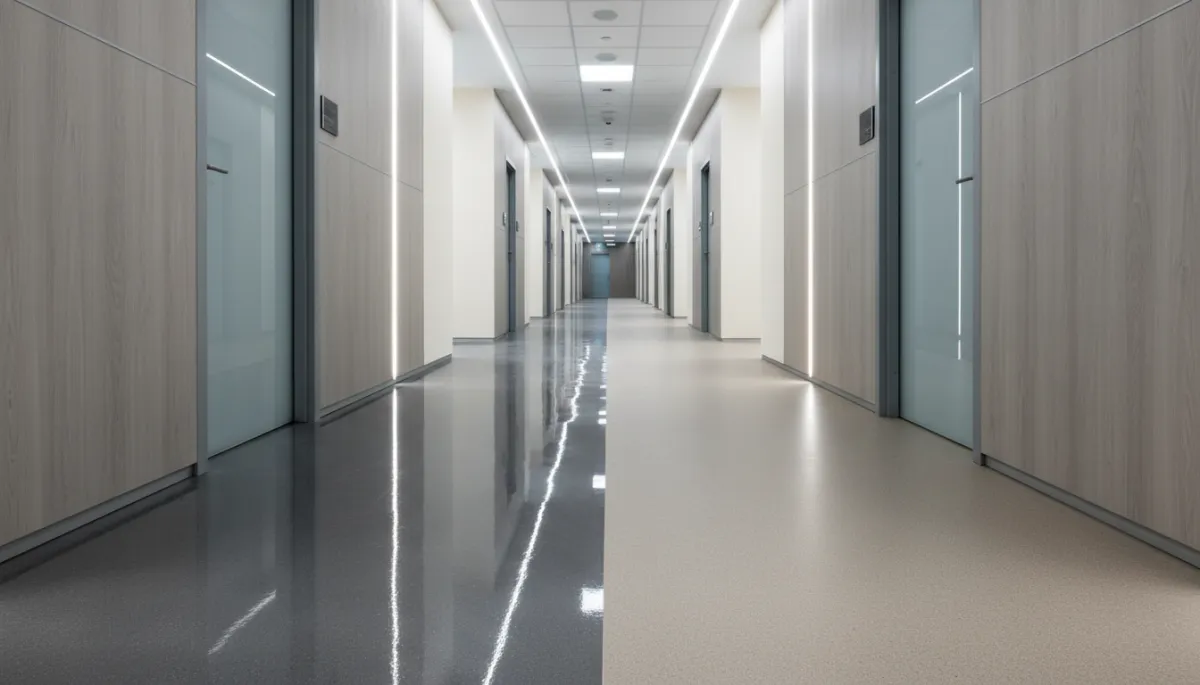
The right coating balances appearance, durability, and maintenance for each space.
Types of VCT and How They Affect Floor Maintenance
VCT Flooring remains a workhorse in commercial settings because it’s cost-effective, durable, and relatively easy to maintain when paired with the right Floor Coatings. But not all VCT is the same, and the type you have will shape your Floor Maintenance strategy.
Common Types of VCT Flooring
Standard VCT – Traditional VCT tiles are porous and require sealing and finishing. They’re often installed in schools, hospitals, and retail stores. These floors rely on a program of dust mopping, damp mopping with neutral cleaners, and periodic stripping and waxing to maintain appearance (flooringinc.com).
High-performance or “no-wax” VCT – Some newer VCT products come with factory-applied coatings designed to reduce or eliminate the need for traditional wax finishes. They still benefit from protective coatings, but the maintenance approach can be lighter and may lean toward specialized sealers instead of multiple wax layers.
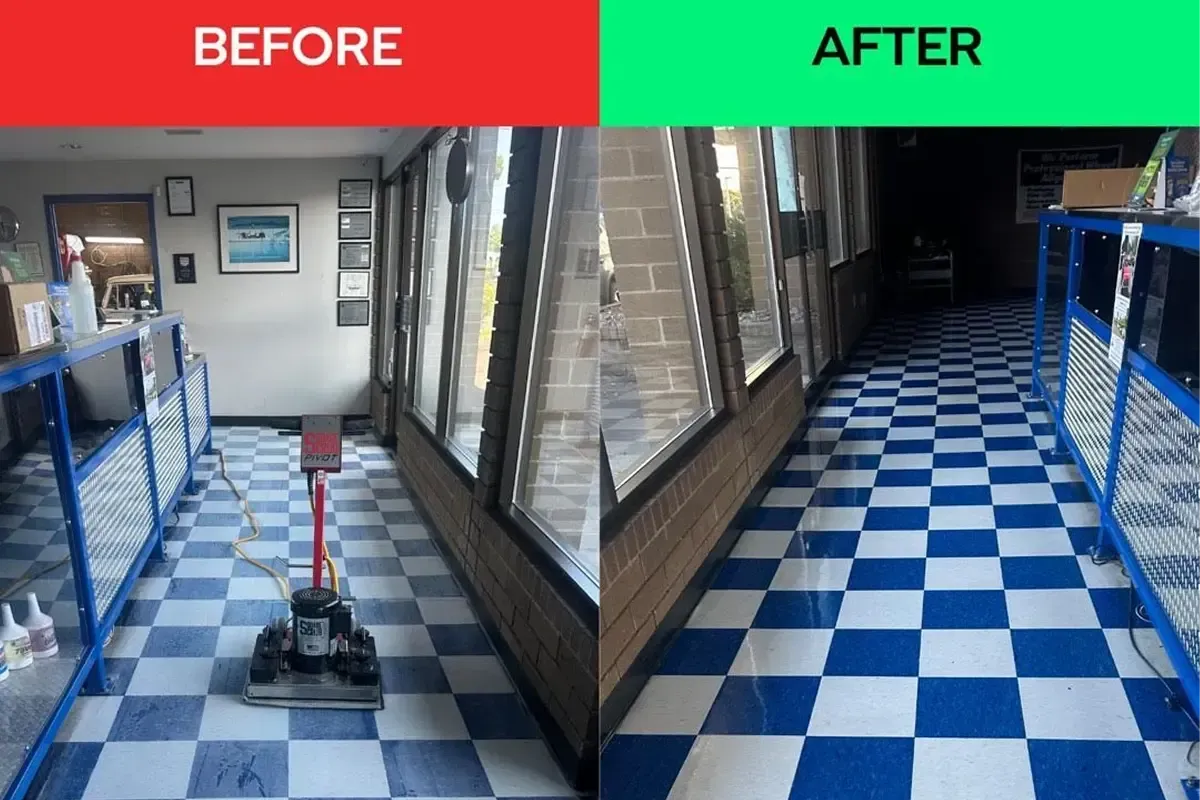
Patterned and designer VCT – Inspired by the “sixth wall” concept, many businesses are using patterned VCT layouts—checkerboards, borders, and inlays—to create visual interest (homesandgardens.com). These floors demand consistent, even coatings so the pattern stays crisp and attractive over time.
Best Practices for VCT Floor Maintenance in 2026
Regardless of type, VCT Flooring thrives on a balanced maintenance plan:
Daily sweeping or dust mopping to remove grit that can scratch finishes (flooringinc.com).
Regular damp mopping with a neutral pH cleaner—avoiding harsh chemicals that dull or damage coatings (cleanlink.com).
Walk-off mats at entrances to capture dirt and moisture before it reaches the floor surface.
Scheduled inspections to identify dull areas or wear paths and address them before they become major problems.
Periodic machine scrubbing, stripping, and re-coating tailored to your traffic levels and the type of finish used.
A partner like TripleILLC.com can evaluate your specific VCT Flooring, recommend whether wax or alternative Floor Coatings are best, and design a maintenance schedule that keeps your floors looking new while controlling long-term costs.
Today’s Floor Needs: More Than Just Shine
In 2026, businesses expect more from their floors than a glossy surface. Modern Floor Coatings must balance several priorities:
Sustainability: Water-based and solvent-free systems are increasingly preferred for lower VOCs and improved indoor air quality (pzsss.com).
Durability and performance: Nano-enhanced and self-healing coatings are emerging to extend the life of commercial floors and reduce downtime for maintenance (pzsss.com).
Hygiene and cleanability: Seamless, self-leveling polyurethane and epoxy systems minimize joints and grout lines where dirt and bacteria can accumulate, ideal for healthcare and food service environments (garagefloorcoating.com).
Aesthetics: Warm neutrals, matte finishes, and stone- or wood-look coatings are replacing the cold gray, high-gloss look of the past (dgfloors.com; simplicityflooringandtile.com).
Understanding today’s floor needs means looking beyond a single product and instead designing a system: substrate preparation, the right coating (wax, polyurethane, epoxy, or sealer), and a realistic maintenance plan. That’s where expert guidance becomes invaluable.
How TripleILLC.com Helps Local Businesses Choose the Right Floor Coatings
Local businesses don’t have time to become Floor Maintenance experts—and they shouldn’t have to. TripleILLC.com specializes in matching the right Floor Coatings to the real-world demands of your facility. Instead of a one-size-fits-all approach, they consider:
The type and age of your flooring (VCT Flooring, concrete, LVT, wood, or a mix)
Traffic patterns from customers, staff, carts, and equipment
Your cleaning resources and schedule—night crews, in-house teams, or outsourced janitorial services
Safety requirements, such as slip resistance and hygiene standards
Desired look and brand image—from high-gloss lobbies to subtle, matte back-of-house areas
With that information, they can advise whether traditional wax, polyurethane, epoxy, or a hybrid system is best for each area of your building. The result is a tailored Floor Maintenance program that protects your investment, reduces disruptions, and keeps your facility looking its best year-round.
Ready to Rethink Your Floor Maintenance? Call to Action for Local Businesses
If you’re still treating every floor the same way—mop, wax, repeat—it’s time to rethink your strategy. Not all Floor Coatings are equal, and the wrong choice can quietly drain your maintenance budget while leaving your facility looking older than it is. Whether you manage a medical office, school, retail store, restaurant, or office building, your floors are one of the first things customers and employees notice.
TripleILLC.com is here to help local businesses navigate the Wax Vs Polyurethane decision, optimize VCT Flooring care, and implement modern, sustainable Floor Coatings that match today’s performance and design expectations. From on-site evaluations to customized maintenance plans, they make it easier to protect your floors—and your reputation.
📌 Next Step for Local Businesses: Schedule a floor assessment with TripleILLC.com. Let a flooring professional walk your facility, identify what truly needs wax, what should be protected with polyurethane or other advanced coatings, and design a Floor Maintenance program that saves time, controls costs, and keeps your floors looking exceptional.
Your floors work hard for your business every day. Give them the right protection—because not all floor coatings are equal, and your facility deserves a solution that’s tailored, modern, and built to last.